
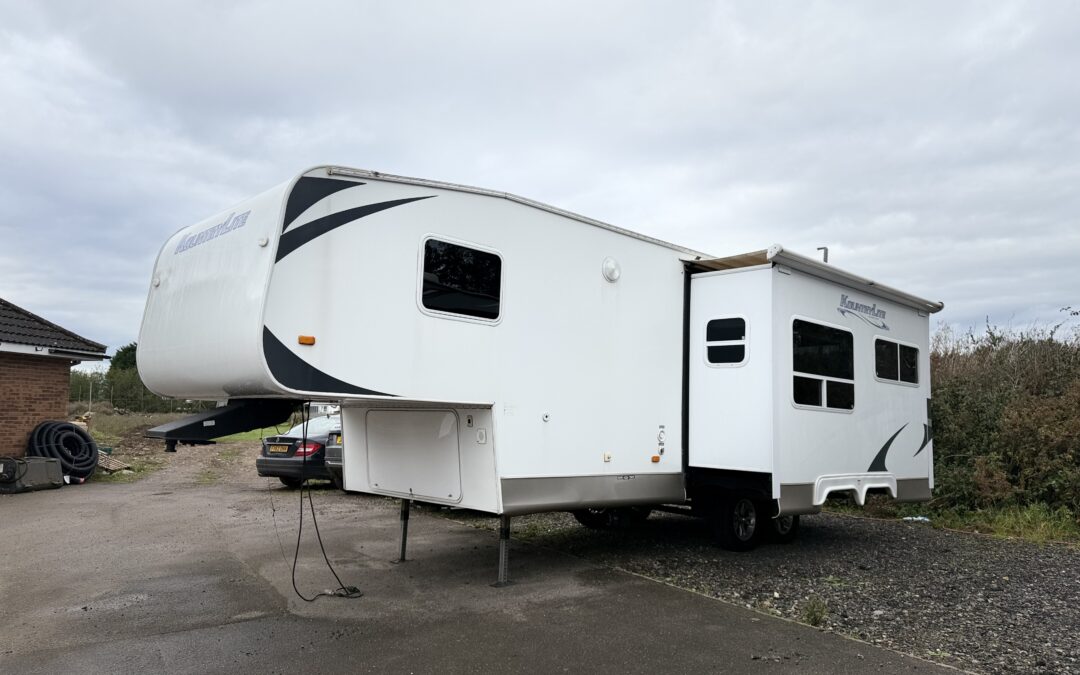
School holidays arrive early this year, which makes March the perfect time to bring your fifth wheel out of hibernation and get set for an Easter getaway. A smooth first trip starts with a smart pre-season routine. Use this practical checklist to de-winterise safely, catch issues before they become costly, and make the most of longer days with confidence. If you prefer expert hands on the job, The STT Group workshop in Lincolnshire can complete servicing, IVA checks, and upgrades ahead of the rush.
De-winterise safely and methodically
If you drained down for winter, begin with a careful reactivation.
- Inspect for pests and damp: Check lockers, under-bed storage and slide-out corners. Look for signs of ingress around windows and roof penetrations. Early attention prevents hidden damage.
- Ventilate and clean: Open windows, run extractor fans, and give soft furnishings a quick freshen. This helps you spot odours that hint at leaks or stale water in pipework.
- Reinstall filters and strainers: If you removed them for storage, refit now so the water system can be flushed correctly.
Sanitise and flush the water system
Clean water is non negotiable for spring touring.
- Fill the fresh tank with a food-safe sanitiser solution at the recommended dilution.
- Open each tap, including shower and outdoor points, until you smell sanitiser, then close and let it sit for the specified contact time.
- Run the water heater only after the system is full, not during the initial draw, to protect the element.
- Flush thoroughly with fresh water until all odour is gone. Replace any charcoal filters after sanitising, not before.
- Check for leaks at PEX fittings, pump connections, and the water heater pressure relief valve while the system is under pressure.
Inspect slide-out seals and mechanisms
Slide-out integrity protects your interior.
- Clean bulb and wiper seals with a mild cleaner, then apply a silicone-safe conditioner to prevent sticking and cracking.
- Look for compression set, tears, or gaps at corners. Seals should sit evenly with the slide deployed and retracted.
- Operate slides fully while listening for grinding or binding. Lubricate rams or rack systems with the manufacturer-approved product. If alignment looks off, book a professional adjustment to avoid structural stress.
Brakes, running gear and hitch points
Your first tow of the year should feel planted and predictable.
- Brake inspection: Check shoes or pads for wear, drum or disc condition, and operation of the breakaway switch. Verify the controller gain setting during a short, safe test tow.
- Bearings and hubs: If service is due, have bearings cleaned, inspected, and repacked. Excess heat or play means immediate attention.
- Suspension: Inspect shackles, equalizers, and bushings for elongation or cracking. Replace worn parts before they chew through tyres.
Tyres, pressures and wheel torque
Cold months are hard on rubber.
- Tyre age: Anything at or beyond five to six years warrants close scrutiny, even with good tread depth. Check sidewalls for microcracks.
- Pressures: Set to the load rating listed on the tyre and confirm when cold. Uneven wear hints at alignment or suspension issues.
- Torque: Re-torque wheel nuts to the manufacturer spec with a calibrated wrench. Recheck after the first 25 to 50 miles of towing.
Heat, ventilation and cooling checks
Comfort systems need an early shakedown.
- Heating: Test your furnace or hydronic system on hook-up and on battery support if applicable. Verify CO and smoke alarms, and replace batteries.
- Ventilation: Run roof fans and inspect vent seals. Clear debris from cowls.
- Air conditioning: A brief spring test catches fan or capacitor faults before hot weather arrives. Clean filters for better airflow.
Battery conditioning and electrical systems
Healthy batteries prevent trip-ending power issues.
- State of charge: Bring batteries to full, then check resting voltage after a few hours off charge. For flooded cells, confirm electrolyte levels and top with deionised water if needed.
- Terminals and cables: Clean corrosion and tighten connections. Check the negative bond to chassis for security.
- Converter or charger: Verify output voltage and float behaviour. If your charger lacks a proper multi-stage profile, consider an upgrade, especially if planning lithium in future.
Firmware updates and onboard tech
Modern fifth wheels often include control panels, inverters, solar controllers and entertainment systems with updateable firmware.
- Check the manufacturer apps or websites for updates to control systems, inverters and solar charge controllers.
- Back up settings before updating. Keep the unit on stable power during the process to avoid corruption.
- Test all lighting circuits, USB points, and 12V accessories after updates to confirm everything is communicating as expected.
How often should a caravan be serviced?
Plan for a full annual service or every 10,000 to 12,000 miles of towing, whichever comes first. An annual habit covers gas tightness, habitation checks, brakes and running gear, electrical inspections, slide-out seal integrity, and safety devices. Heavier use or full-time living may justify interim checks on brakes, tyres, and seals mid season.
What maintenance does a caravan need?
Routine care includes:
- Habitation checks: damp testing, seal inspection, and door and window operation.
- Running gear: brakes, bearings, suspension, and wheel torque.
- Water system: sanitising, pump strainer cleaning, anode inspection where fitted, and leak checks.
- HVAC: testing heating and cooling, cleaning filters, and confirming flue and vent integrity.
- Electrical: battery health tests, RCD and MCB operation, 12V fuses and connections, and charger performance.
- Bodywork: roof seams, slide-out toppers, awning fabric and mounts.
What regular maintenance should be done on an RV?
Beyond the spring tasks above, keep up with:
- Monthly battery checks when stored.
- Tyre pressure checks before every trip.
- Slide operation and seal cleaning after dusty or coastal journeys.
- Roof and seal visual inspections every quarter.
- Brake controller function tests before each tow.
What is the most common RV repair?
Across workshops, water ingress and the damage it causes are among the most frequent repairs, closely followed by brake and bearing issues. Small seal failures around slide-outs, roofs or windows can lead to soft floors or swollen cabinetry if left unchecked. Regular seal inspection and annual servicing are the best prevention.
Book early for servicing, IVA checks and upgrades
Workshop diaries fill quickly ahead of Easter. If your fifth wheel is due a service, needs an IVA check for compliance, or you want to add solar and lithium batteries for longer daylight touring, secure a slot now. The STT Group technicians handle routine servicing, diagnostics and bespoke upgrades, and can advise on battery chemistry, charger compatibility and solar sizing for UK conditions. If you are considering a change of layout for the season ahead, browse our range of fifth wheel campers for ideas and availability that suit your tow vehicle and licence.
For hands-on help with RV maintenance and upgrades, book the STT Group workshop: https://thesttgroup.com/workshop/
Interested in models with slide-outs or a different floor plan, see fifth wheel campers: https://thesttgroup.com/product-category/fifth-wheel/
Need repairs before your first trip, explore caravan repair services: https://thesttgroup.com/workshop/
Final spring checklist recap
- De-winterise carefully and sanitise the water system.
- Inspect slide-out seals, then test mechanisms end to end.
- Service brakes, bearings and suspension, and verify wheel torque.
- Set tyre pressures to spec and confirm tyre age.
- Test heating, ventilation and air conditioning.
- Condition batteries and check charging equipment.
- Update firmware on control systems and test all electrics.
- Book your annual service and any IVA or upgrade work as early as possible.
A little preparation now saves time on the road and keeps your Easter touring relaxed. If you would like expert support or a second pair of eyes on tricky items, The STT Group team is ready to help you set off with confidence.